| |

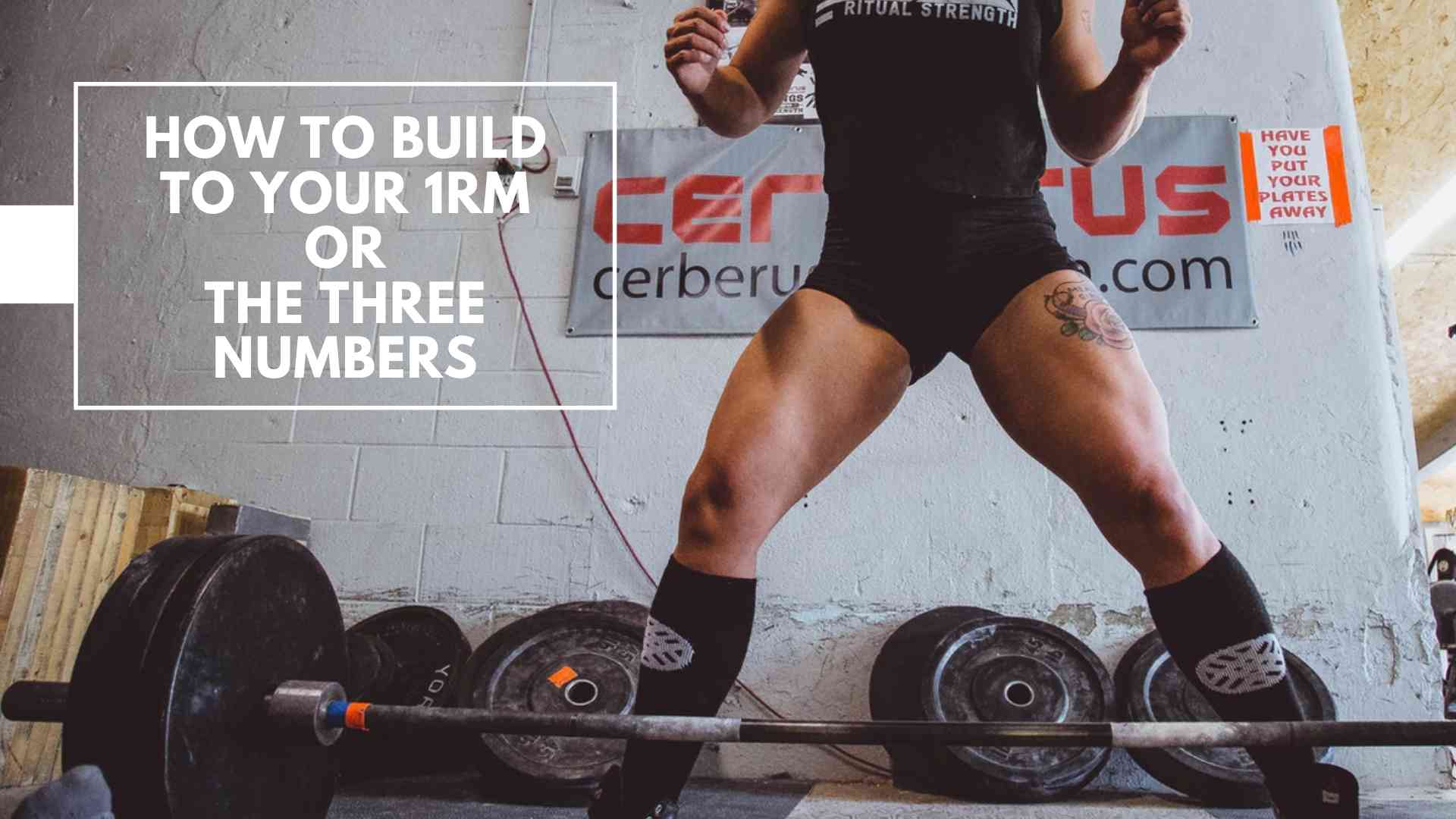
how to build to your 1rm

The Basic Principles


  • Make informed decisions, not predictive decisions. Check your recent records and use your current performance to guide your planning. When making decisions during lifting, don't use the perception of effort to determine what will happen in the next ones. Let your movement and technique be the facts on which you base your decisions.
  • Find your three numbers. Make sure that you are as emotionally ready as you are physically ready. Check this video to help you here.
  • Moderate and small jumps. Before your get to the 90% zone, perform moderate jumps of 5% at most. Once you get to the upper zne, keep the jumps small t 3% at most.
  • Claim your 1% gain. Always claim your 1% gain. If you are worried that you will lose energy and not have enough oomph to get a 105%, you will not get it no matter what. Get your 101%, always. If the number you think you should get is higher than 101%, get 101% and then get that other number.


the numbers for a 1RM test


Set 1: 5 reps at 70%

Set 2: 3 reps at 75%

Set 3: 2 reps at 80%

Set 4: 1 rep at 85%

Set 5: 1 rep at 90%

Set 6: 1 rep at 95%

Set 7: 1 rep at 98%

Set 8: 1 rep at 101%

Set 9: 1 rep at ?

Set 10:?


rest 2-3 minutes between sets

all percentages are based of your recent max. Don't estimate over your recent max.


the numbers for a 3RM test


Set 1: 5 reps at 70%

Set 2: 3 reps at 75%

Set 3: 2 reps at 80%

Set 4: 1 reps at 83%

Set 5: 1 reps at 85%

Set 6: 1 reps at 87%

Set 7: 3 reps at 90%

Set 8: 3 reps at 93%

Set 9: ?


rest 2-3 minutes between sets

all percentages are based on your recent 1RM. Don't estimate over your recent max.



the numbers for a 5RM test


Set 1: 3 reps at 70%

Set 2: 3 reps at 75%

Set 3: 3 reps at 80%

Set 4: 3 reps at 83%

Set 5: 5 reps at 85%

Set 6: 5 reps at 87%

Set 7: ?


rest 2-3 minutes between sets

all percentages are based on your recent 1RM. Don't estimate over your recent max.



If you liked this post, you will love these...

Similar Posts

  • | |

    What I Learned at The 2019 CrossFit Games

    Last week I got to spend one week in Madison, Wisconsin, attending the CrossFit Health Conference and the CrossFit Games. It was a very rewarding experience from beginning to end. I got some good stories about meeting “famous” people and their weird unexpected quirks. I witnessed amazing athletic performances and got to hear some of...

  • |

    The Importance of Warming Up

    I think we all understand the importance of the warm up before working out. Most of us have learned it the hard way: that one day when rushed we naively said to ourselves: “the first round will be my warm up”. And that first round sucked, heart rate was through the roof fast, and for the next four rounds you were just trying to survive. Yes, we all know warming up is important, but somehow we all still neglect it. In my experience, this happens because we don’t have any other reason to do it than that we are “supposed to” and anyhow, it often feels harder than the actual workout. The problem with thinking of it this way, is that it makes it a lot easier to say “fuck it, 20 squats will warm me up.”

  • | | | |

    Don't be lazy, have higher standards

    I bet you are thinking I mean you should  go out workout more and workout harder. Memories of all those times you said you would wake up and work out and you didn’t will run through your head. You might remember those workouts during which you were tired and you did not push as hard as you feel you should have,  But nope, that is not what I mean. That is just your guilt. Your consistency on a given program is often not a laziness problem as much as an organizational problem. How hard you can push on a given workout is very seldom a willpower problem, as it is a self-regulation problem. I  am not here to guilt trip you. Let me tell you what I DO mean.

  • | |

    Training Hard

    We all love to train hard. We love the feeling of working our asses off, yet I think training hard, truly training hard, is greatly misunderstood. Hours of media featuring Energy Drinks, Athletic Shoes, and awesome-sports-movies-action-montages has lead us to confuse training hard with intensity. We have this image in our head that training hard is finishing a workout sweaty and gassed, lying on the floor looking up at the ceiling like somebody just punched us in the face and stole all our money while quoting Jame Joyce. That outcome turns out to be  fairly easily achieved: just do 50 burpees as fast as you can without stopping... it will take you less than 5 minutes and if you really commit to not stopping you will finish on the ground regretting life.

  • | | |

    Fatigue is Hyperbolic and How to Pace

    In some of the previous posts, I have talked a lot about the idea that a good workout should leave you energized rather than destroyed. Not always, sometimes we have to go to the limits to learn what those limits are. But in general, getting above your threshold more than producing physiological adaptation produces fatigue. And fatigue is really not that cool. The video today presents one of the many ways to look at and understand fatigue. This video is excellent for my endurance athletes out there. Watch it and let me know what you think!

Leave a Reply

Your email address will not be published. Required fields are marked *