What I Learned at The 2019 CrossFit Games
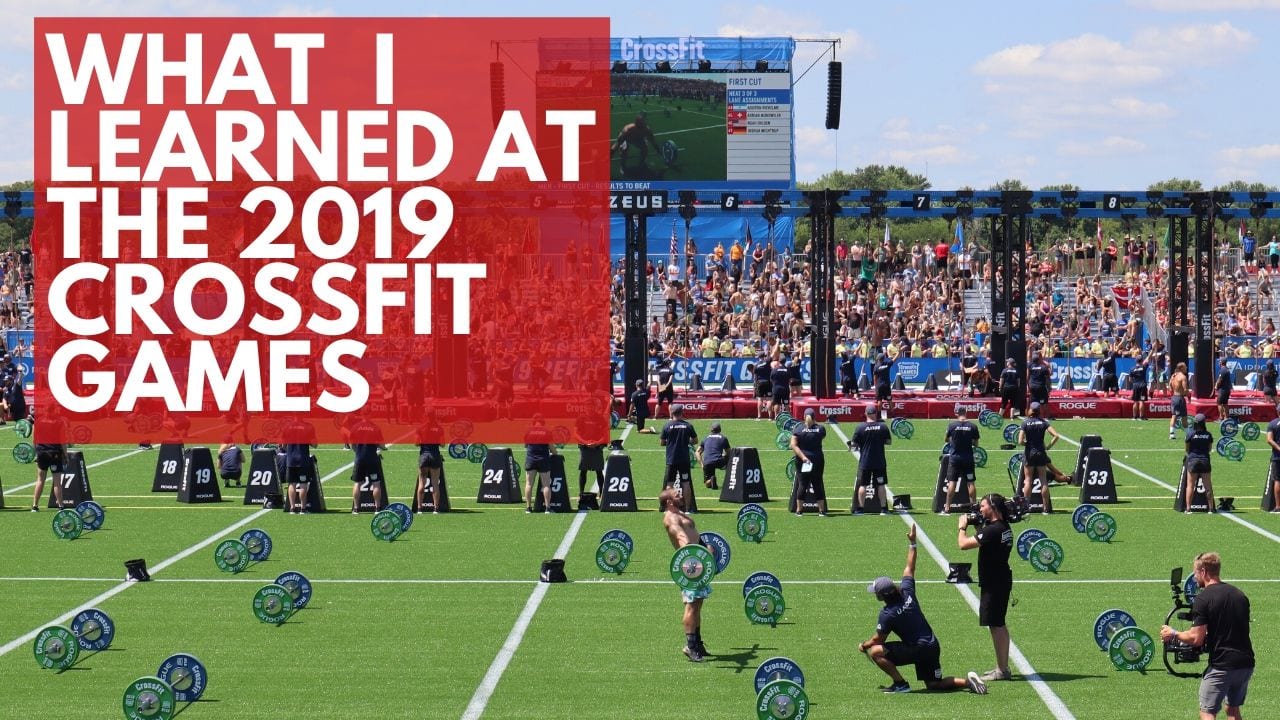
Last week I got to spend one week in Madison, Wisconsin, attending the CrossFit Health Conference and the CrossFit Games. It was a very rewarding experience from beginning to end. I got some good stories about meeting “famous” people and their weird unexpected quirks. I witnessed amazing athletic performances and got to hear some of the coaches inputs for those performances. And I got a lot of insider perspectives from the behind the scenes of the whole thing. You know, I got all the sexy, gossipy stuff that name droppers love to share. But that is not what I went there to do, nor what I want to share with you. I went there to learn, I wanted to come out knowing more than when I came in. I did! So here are some of my observations
1. Science is hard, especially when it comes to nutrition and fitness -a.k.a. health. The major part of the health conference was conducted by world-class researchers that have dedicated their careers to denounce poor scientific conduct and poor research. More importantly, they have proven and shown how this poor science becomes both policy and medical dogma quite commonly. Most of the conference centered on research on cholesterol and statins. Presenters went deep and thoroughly addressed all published studies on the topic and showed us how the benefits of statins are greatly overstated by the pharmaceutical industry and definitely not worth the plethora of adverse side effects. Check out these awesome books: here, and here.
The main problem I identified was not on the scientific establishment itself, rather on how poorly prepared the public is to parse scientific information. Especially because this info is tainted by the interests of so many players: big pharma, researchers, government agencies, marketing companies, etc. And by public, I mean everybody: me, you, and health professionals alike. If you are thinking: “not me, I am pretty smart”, you are the most susceptible to this. It is really a hard job to discern good info from bad info in our digital world. For whatever health topic you want to learn about, you can go to PubMed and find a study. You can find studies defending veganism or studies defending carnivorism. You can find studies blaming the meat industry for interference with the research. You can find studies blaming the grain industry for the interference with research. Eggs are good one day and bad the next. And let’s not talk about Tumeric, that shit’s crey. You know how it goes, you’ve been there.
You might think: “Yes Juan! But again, I am pretty smart I can discern between a good study and a bad one”. And you might be right, but it is never about one study. To get good info today you have to go through ALL the studies. Moreover, you have to go through the painful task of researching the authors of the studies and then the funding of said studies. And researching funding takes a lot of time. Then you have to really analyze their methodology and check their statistics. It takes so much work than the average citizen does not have the attention span to do it for even one study --there will be two or three Instagram notifications that will get in the way of that. Think about this: most people say to me they don’t have two hours on Sunday to meal prep. I am sure most of us will not take the time to research honestly and thoroughly the impact of artificial sweeteners on our bodies unless our job or our life literally depends on it.
Yes! That was the main thing I learned: science is hard and we didn’t teach our present day adults to read well enough. Our adults are not literate in ways that matter, and that is a problem. In the fitness and nutrition world the main battle is not about push-ups and deadlifts, it’s about educating humans to read more, and to spend more time creating a critical thinking mindset. It is actually an awesome challenge. One of the projects that CrossFit Inc. is developing is to certify trainers in the understanding of basic philosophy and the history of science. They actually want to make bros read Aristotle and Kuhn. I love it, just as much as I love making my philosopher clients lift weights!
2. Bias has to be stated. In a previous nutrition conference I attended, all the researchers presenting about nutrition stated their biases. It was great. Vegans said they were vegans, keto people said they were keto people, and so on and so forth. It was a nice token of intellectual honesty I never saw in my 15 years in academia. Stating your personal assumptions and biases before you present your research tells me you care about logic enough. It tells me you know axioms and assumptions are the foundation of any argument. It also tells me you are open-minded and willing to see how much your view is conditioned by your personal experience --no matter how quantifiable your data is. It was great!
This conference lacked that and I think it was a loss. One of the things you learn first hand in working in nutrition/fitness is that most experts, trainers, coaches, nutritionists, dietitians, will always try first what worked for them with their clients. A keto coach will naturally push for a more keto-ish approach with their clients, even if unconsciously. A vegan will push for vegetarianism and so forth. We are all inherently biased. The problem is that being aware of this is not enough to escape it. You have to accept it and always be vigilant. The cool thing is if your clients know you are aware of your bias, they will also infer you are open to different approaches. They will trust you more, they will be more open to you, and they will be more willing to “work” with you.
I think presenters would have greatly benefited from stating their biases. Just like my clients, the people in the room with different ideas would have felt way more comfortable to share their views. That would have greatly enriched the debate. But this did not happen, and because of that, I think the post-presentation debates were a little bland and not very interesting.
3. If you want to learn, you need to read A LOT. This goes hand in hand with my first point. However, what I want to stress out is that digital media is still not enough to really cement and distribute knowledge in the way text and books do -yes, I mean text and book also in digital form. We are still typographical beings. We can watch seven hundred youtube videos, two million instagram posts, three documentaries on netflix, and text will trump it all. Whatever the topic is, if you want to really learn it, you will end up back in text. The multimedia world has not changed this yet. It will for sure, but it will take longer than we millenials think. As I often say to myself: READ MDFK, READ!
4. Complex problems, simple solutions. In fitness and nutrition, we are dealing with complex, big problems. Day in and day out we are trying to change the very basics of human behavior: how you eat, how you breathe, and how you move. It is a very complicated problem mostly because of egos. Egos getting in the way of everything! Take out the egos and six-packs would be out of the question, people would not care about breaking personal records every week, or worry about being better than others, and we all would be giving to our brains and bodies exactly what they need… I digress, let's move forward. But no matter how complex our problem is the solutions are simple, old, and tried and proved. Learn from others and to listen to your own body, aim to move better and often, and eat meats and/or veggies, nuts and seeds, some fruit, little starch, and no refined sugar. Simple.
5. The difficulty of a workout is not determined by the nature of it. The programming for the Games this year was great. There was a big move toward simplicity and the fundamentals of fitness. Complicated schemes and grandiose skills were replaced by the more rudimentary foundations of human work capacity. This aligns greatly with my views and so I was naturally enjoying it.
What was most interesting was that despite being more basic it was not any easier, Quite the opposite, athletes got to prove their fitness in a very deep and meaningful way. Some athletes found a lot of holes in their capacity. Holes that would have been covered by the complexity of the test in previous editions of the CrossFit Games. This gave me an insight I have always observed but never managed to put into words: the difficulty of a workout does not reside in the workout itself but on your expression of said workout. I often give this example to my marathon runners: a mile run can be the easiest nicest walk you can have, or an excruciating measure of grit, work capacity, and diligence. However, most people would prefer to “run” a marathon over lowering their mile time. This is simple to explain. If you say “I ran a marathon” people will be in awe, if you say I ran a mile people will think you are lazy. But neither is true, it all depends on the effort and the way you do it.
5. Fitness ≠ Leanness ≠ Mass. They are all related but one does not imply the other. It was great to see so many different shapes and kinds of bodies. There were champion athletes, as fit as you could possibly be, that were not at the levels of leanness most people would expect. On the other side of the spectrum, there was a shit-ton of six-packs that could not perform very well at all. There were enormous gals that were amazing at bodyweight movements, and smaller gals that could lift the world. It was fun to watch all these discrepancies. Especially because I see so many of my clients frustrated and sad because their expectations on these things don’t match reality. I have clients that are healthy, fit, and yet they are not as lean as they think they should be. They get very frustrated but fail to realize that what is wrong is the idea that healthy+fitness=leanness. I know that no matter how much and how hard I rationalize this with them, I will not change their minds. But seeing this first hand was very meaningful to me. It reminded me to stay grounded, to remember that I am still an educator and that it is my duty to tear down narratives that make people feel inadequate and less than.
6. Respect and recognition are meaningful only when they are shared. I shared a beautiful moment with a coach I greatly respect who recognized me and my work. It felt good. When I was in academia my humble research was recognized by the guys that knew most about the topic. It was the culmination of a lot of hard work and it is something of which I will always be very proud. But that did not feel as good as this and I know why: I did not respect the “building” I was in as much. I did not share its views. That does not say anything about academia but it says everything about me. This past week I learned that respect is always personal and that’s why it is earned or lost. Respect is a relationship not a quality. I felt respected by somebody I respect. It was mutual and it meant something. I sharted my pants a little, it was epic.