
Similar Posts
Plateaus are part of the process, Embrace the stuck!
Plateaus are often understood as problems. As stagnation, as if there is something wrong. Plateaus are a fundamental part of the process. Understand this, and you will be able to surpass them.
- Close the Gap | Coaching | Fitness | Mindset
What I have learned from coaching ... so far
I arrived to coaching after teaching at the college level for fourteen years. I am a voracious learner. I loved (and still do love) universities, and I loved the idea of getting paid to create knowledge and help others learn. However, during all those years in academia, I always felt there was something missing. Despite being surrounded by amazing people, both good students and brilliant colleagues, I always felt lonely. Teaching in a university and academic research are solitary tasks. The whole building -the physical and the institution- is founded on medieval and early modern ideas. Books, authors, and teachers are the main players of the game, and everything revolves around them. It took me years of research to understand that universities by conception are not made for students, universities are made for authors. It was when I started coaching that I understood all this. It was really after spending thousands of hours within the walls of my garage teaching people the basics a human movement literacy that I saw what I felt was missing.
Training Hard
We all love to train hard. We love the feeling of working our asses off, yet I think training hard, truly training hard, is greatly misunderstood. Hours of media featuring Energy Drinks, Athletic Shoes, and awesome-sports-movies-action-montages has lead us to confuse training hard with intensity. We have this image in our head that training hard is finishing a workout sweaty and gassed, lying on the floor looking up at the ceiling like somebody just punched us in the face and stole all our money while quoting Jame Joyce. That outcome turns out to be fairly easily achieved: just do 50 burpees as fast as you can without stopping... it will take you less than 5 minutes and if you really commit to not stopping you will finish on the ground regretting life.
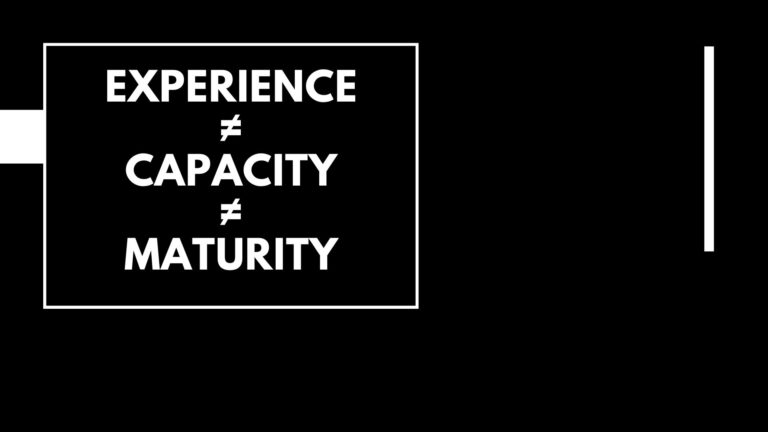
EXPERIENCE ≠ CAPACITY ≠ MATURITY
We are always trying to apply the things we learn in training to life outside the gym. In this video we go in the opposite direction. It is all about becoming a mature athlete.
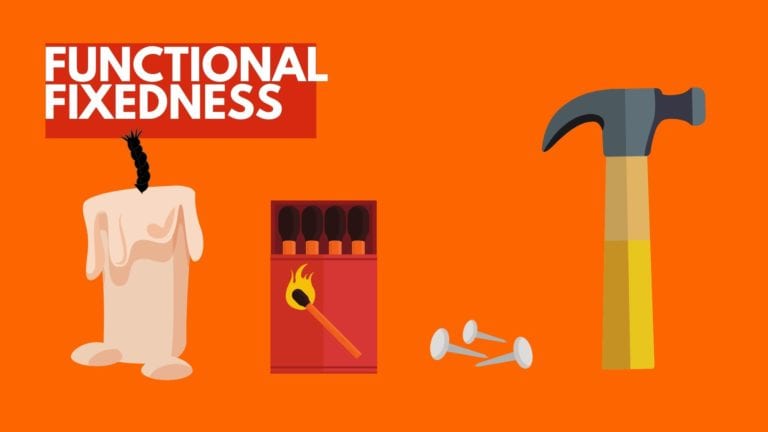
Functional Fixedness
However, because we humans clearly cannot have nice things, the term has been bastardized, oversimplified, and not problematized enough. When Henrick laughs at my suggestion of doing curls, he is just repeating a learned behavior. It is common in the functional world to look at other forms of training and think they are poor, vain, or irrelevant. On the one side, this is how every culture is created, by creating an other to separate from. That’s how we define our existence as a thing. On the other hand, this attitude is the representation of a very bad case of functional fixedness (FF). Think of this as a bad habit of the mind, a way of thinking that hinders more than helps, and that in the case of Henrick will limit his performance and his movement capacity. The purpose of this post is to explain to you what FF is so that you can catch yourself in this trap, and do something about it.
- Close the Gap | Fitness as Nutrient Partitioning | Mindset | Nutrition | Nutrition as Self-knowledge
F! Weight
eal change is slow and hard. It takes effort, and although it’s incredibly rewarding and edifying, it can be painful and frustrating at times. It can also feel very uncertain: “am I doing the right thing here? Am I headed in the right d