
Similar Posts
Henrick's Rower and Results Oriented Mindsets
The first time I explained to one of my male athletes that the Concept2 rower was made with a specific body type in mind it totally backfired. Henrick was complaining to me about the size of his arms, telling me it made doing pull ups harder. He was using this narrative to explain why he...
3 ways to add rituals and routines to your training
Recently I took a class on lead rope climbing. Being a movement geek and an overall nerd it suffices to say I was in my element. When the beginner --like me-- goes from top-rope climbing to lead climbing, the most evident hurdle is falling. The rope is holding you from below so when you fall...
My Two Main Principles in Fitness and Nutrition
The Strong Story Hypothesis states that the mechanism that enables us to tell, understand, and recombine stories is what separates us, humans, from primates. In other words that storytelling is what makes our thinking brainz special. The exciting thing is that Patrick Winston, its author, was an engineer and a professor at MIT, not an anthropologist or a social sciences guy. For many years he was the head of the Artificial Intelligence Lab. So when he says that storytelling gives us an evolutionary advantage over primates, that is meaningful. He gets to this conclusion by asking the right question. You see, the AI field was always trying to answer the question: can computers reason like humans? Winston made another question, more elegant, more interesting. What makes humans different than primates? Why are we capable of more?
Touché!
Nothing like a good question asked at the right time. In the video below, I present to you the principles that guide my practice in fitness and nutrition. I show them in the form of questions too. I believe this is the most effective way to approach such a complex problem. When you feel sluggish and unproductive today, instead of heading to Facebook, get this video a watch and let me know what you think.
What are you getting out of your training?
I love coaching, I love training. I have spent several years of my life in higher education institutions earning various degrees. However it’s in the gym that I have learned the most. Watching people sweat, talking about food, feelings, and the biomechanics of the squat, is where I have seen the most epic battles, and where I have had the biggest impact. I love it. Nonetheless there is one aspect of training/coaching that I have not yet learned how to address very well and that bothers me constantly. This post is an attempt to start changing that.
What the F#@%$ck is Recovery?
So is napping recovery? Is stretching better than rolling? What do you mean I should not be sore. No pain, no gain, dude! Of course I want to sleep better and longer, but then at what time do I work out if I am effing sleeping 8 hours? Should I ice or not? Should I run on my recovery days or should I do yoga? Why is Francine talking to me about floating chambers, and why is Henrick massaging himself weirdly with that percussion drill.
.
Recovery is a weird topic, full of crazy things, and a lot of sci-fi marketing. In other words, what the fuck is recovery?
.
Watch the video to know more about it!Why train?
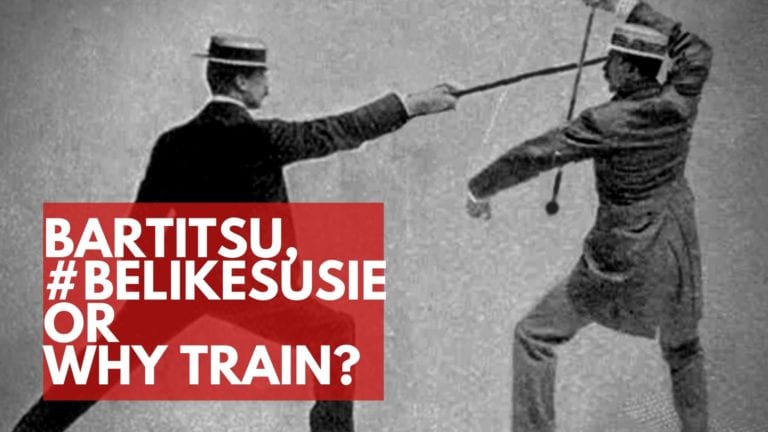
In the world of fitness it’s common to hear that you should find a “why” for your training. The idea behind this practice is to find an emotional connection to some part of your identity to use as motivation whenever you feel like you want to throw in the towel, or not get out of bed for your morning workout. Although this can be very useful, it is also the source of a plethora of cheesy motivational memes and worse, it comes with the assumption that exercise is inherently good for our health and all we need is more motivation and willpower. This seems like an innocent idea but it is NOT. This way of thinking takes from us the opportunity to question the physiological purpose of our training, and in doing so set us up for failure before we even start, regardless of how many hours of sweat we put in. I believe that this is the kind of “why” we should identify. Let me explain.