
Similar Posts
De-distorting your mind
Changing the beliefs takes work, hard and satisfying work. The task is to identify how and when those core beliefs act and debate them every time they operate. The cool thing is that because we are all in this together, Beck and one of his students, David Burns, have managed to identify what they call habits of mind. These are just general ways in which those core beliefs usually operate in all of us.
- Close the Gap | Coaching | Fitness | Mindset
What I have learned from coaching ... so far
I arrived to coaching after teaching at the college level for fourteen years. I am a voracious learner. I loved (and still do love) universities, and I loved the idea of getting paid to create knowledge and help others learn. However, during all those years in academia, I always felt there was something missing. Despite being surrounded by amazing people, both good students and brilliant colleagues, I always felt lonely. Teaching in a university and academic research are solitary tasks. The whole building -the physical and the institution- is founded on medieval and early modern ideas. Books, authors, and teachers are the main players of the game, and everything revolves around them. It took me years of research to understand that universities by conception are not made for students, universities are made for authors. It was when I started coaching that I understood all this. It was really after spending thousands of hours within the walls of my garage teaching people the basics a human movement literacy that I saw what I felt was missing.
- Close the Gap | Coaching | Finding What Works for You | Fitness | How to be a learner? | Mindset | Smart Practices
Banzo's sword and metric fixations
Are you a victim of your metrics? Are you constantly trying to better your metrics, just to feel frustrated and unaccomplished? I have been there, it is awful. In this post I present to you a set of principles that will help you use metrics to serve you and not the other way around.
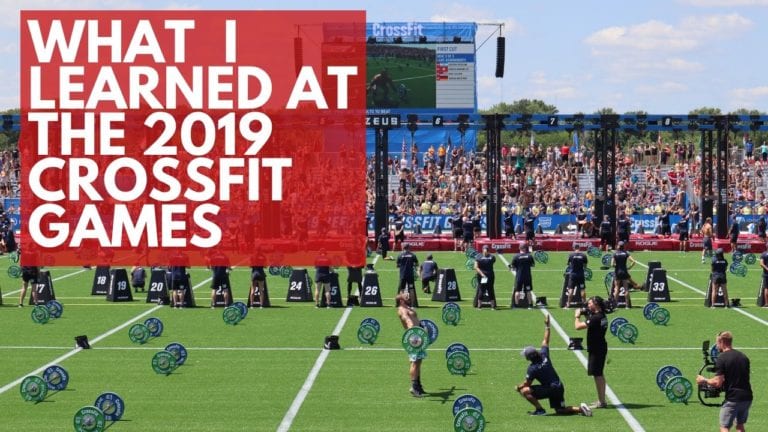
What I Learned at The 2019 CrossFit Games
Last week I got to spend one week in Madison, Wisconsin, attending the CrossFit Health Conference and the CrossFit Games. It was a very rewarding experience from beginning to end. I got some good stories about meeting “famous” people and their weird unexpected quirks. I witnessed amazing athletic performances and got to hear some of...
- Life is your Mindset Gym | Mindset | Science | The Gym as Your Mindset Sandbox | Train your mind in the gym | Training
Are you training your mindset?
Both of my athletes Francy and Henrick agree with me that mindset is important when it comes to athletic performance. This is unusual because they mostly think I am full of shit. Truth is most people know that what you think greatly determines how you perform at a given task. This is very intuitive and obvious on a superficial level. We all know that if you think you suck at running, well guess what? You are going to suck at running. What is really hard for most people is to flip it around and use this idea to their benefit. But in fact, the base of all sports psychology is exactly this: if you want to be good at something you have to believe that you can actually be good at that thing.
- Close the Gap | Fitness | Growth Mindset | How to be a learner? | Mindset | Train your mind in the gym
Why is mental fitness important in CrossFit?
Mental fitness extends further than your ability to suffer through workouts, and training your mind is just as important as your physical training in your path to becoming a better athlete.