| |

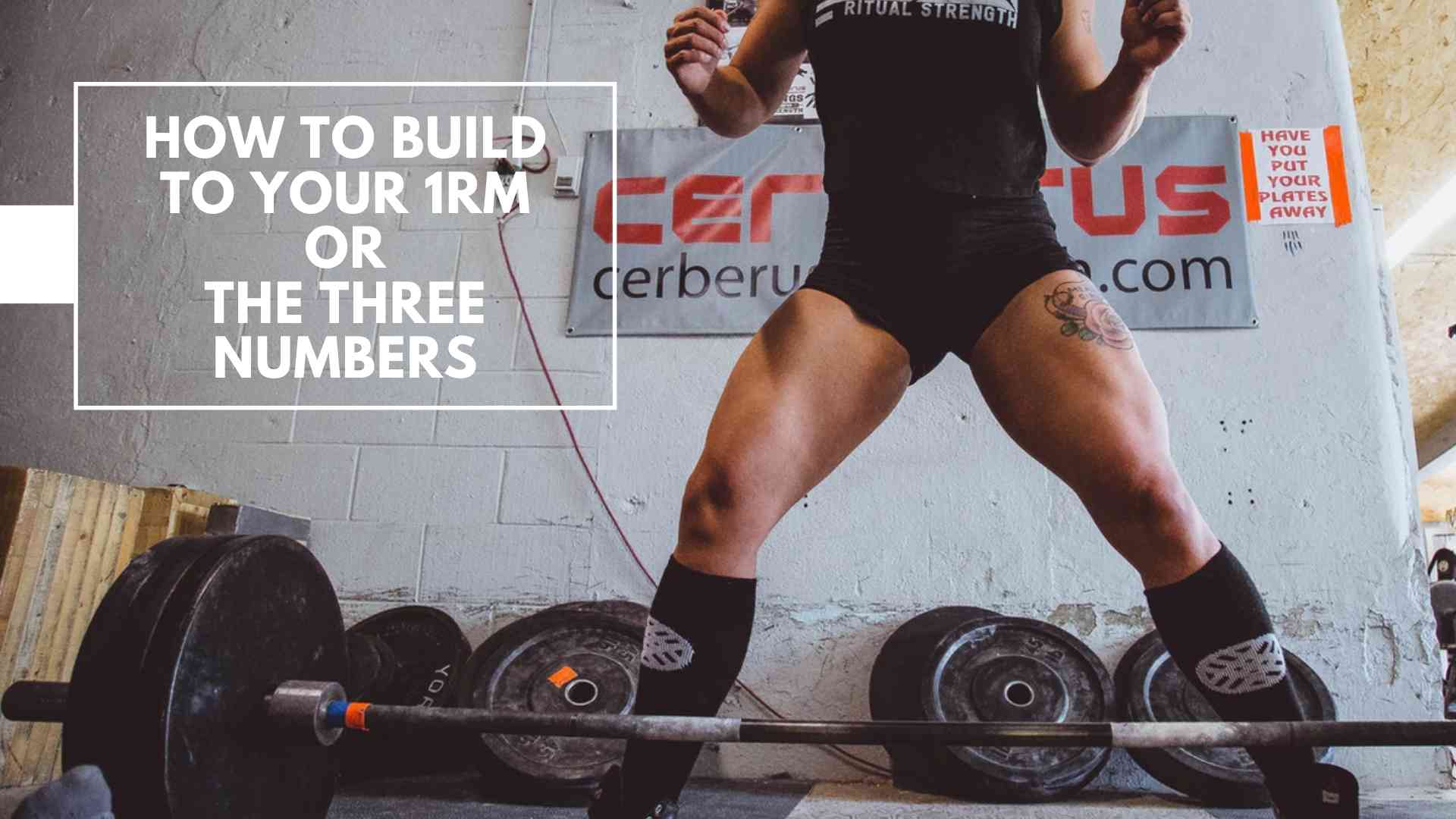
how to build to your 1rm

The Basic Principles


  • Make informed decisions, not predictive decisions. Check your recent records and use your current performance to guide your planning. When making decisions during lifting, don't use the perception of effort to determine what will happen in the next ones. Let your movement and technique be the facts on which you base your decisions.
  • Find your three numbers. Make sure that you are as emotionally ready as you are physically ready. Check this video to help you here.
  • Moderate and small jumps. Before your get to the 90% zone, perform moderate jumps of 5% at most. Once you get to the upper zne, keep the jumps small t 3% at most.
  • Claim your 1% gain. Always claim your 1% gain. If you are worried that you will lose energy and not have enough oomph to get a 105%, you will not get it no matter what. Get your 101%, always. If the number you think you should get is higher than 101%, get 101% and then get that other number.


the numbers for a 1RM test


Set 1: 5 reps at 70%

Set 2: 3 reps at 75%

Set 3: 2 reps at 80%

Set 4: 1 rep at 85%

Set 5: 1 rep at 90%

Set 6: 1 rep at 95%

Set 7: 1 rep at 98%

Set 8: 1 rep at 101%

Set 9: 1 rep at ?

Set 10:?


rest 2-3 minutes between sets

all percentages are based of your recent max. Don't estimate over your recent max.


the numbers for a 3RM test


Set 1: 5 reps at 70%

Set 2: 3 reps at 75%

Set 3: 2 reps at 80%

Set 4: 1 reps at 83%

Set 5: 1 reps at 85%

Set 6: 1 reps at 87%

Set 7: 3 reps at 90%

Set 8: 3 reps at 93%

Set 9: ?


rest 2-3 minutes between sets

all percentages are based on your recent 1RM. Don't estimate over your recent max.



the numbers for a 5RM test


Set 1: 3 reps at 70%

Set 2: 3 reps at 75%

Set 3: 3 reps at 80%

Set 4: 3 reps at 83%

Set 5: 5 reps at 85%

Set 6: 5 reps at 87%

Set 7: ?


rest 2-3 minutes between sets

all percentages are based on your recent 1RM. Don't estimate over your recent max.



If you liked this post, you will love these...

Similar Posts

  • | | |

    What the F#@%$ck is Recovery?

    So is napping recovery? Is stretching better than rolling? What do you mean I should not be sore. No pain, no gain, dude! Of course I want to sleep better and longer, but then at what time do I work out if I am effing sleeping 8 hours? Should I ice or not? Should I run on my recovery days or should I do yoga? Why is Francine talking to me about floating chambers, and why is Henrick massaging himself weirdly with that percussion drill.
    .
    Recovery is a weird topic, full of crazy things, and a lot of sci-fi marketing. In other words, what the fuck is recovery?
    .
    Watch the video to know more about it!

  • | | |

    Functional Fixedness

    However, because we humans clearly cannot have nice things, the term has been bastardized, oversimplified, and not problematized enough. When Henrick laughs at my suggestion of doing curls, he is just repeating a learned behavior. It is common in the functional world to look at other forms of training and think they are poor, vain, or irrelevant. On the one side, this is how every culture is created, by creating an other to separate from. That’s how we define our existence as a thing. On the other hand, this attitude is the representation of a very bad case of functional fixedness (FF). Think of this as a bad habit of the mind, a way of thinking that hinders more than helps, and that in the case of Henrick will limit his performance and his movement capacity. The purpose of this post is to explain to you what FF is so that you can catch yourself in this trap, and do something about it.

  • | | | |

    Don't be lazy, have higher standards

    I bet you are thinking I mean you should  go out workout more and workout harder. Memories of all those times you said you would wake up and work out and you didn’t will run through your head. You might remember those workouts during which you were tired and you did not push as hard as you feel you should have,  But nope, that is not what I mean. That is just your guilt. Your consistency on a given program is often not a laziness problem as much as an organizational problem. How hard you can push on a given workout is very seldom a willpower problem, as it is a self-regulation problem. I  am not here to guilt trip you. Let me tell you what I DO mean.

  • | | |

    What are you getting out of your training?

    I love coaching, I love training. I have spent several years of my life in higher education institutions earning various degrees. However it’s in the gym that I have learned the most. Watching people sweat, talking about food, feelings, and the biomechanics of the squat, is where I have seen the most epic battles, and where I have had the biggest impact. I love it. Nonetheless there is one aspect of training/coaching that I have not yet learned how to address very well and that bothers me constantly. This post is an attempt to start changing that.

  • | | | |

    Learning New Skills

    When I  start working with a new client , I ask them, how do you think I can help you? The answer is never what a coach would like to hear. I would like to hear some romantic, grandiose version of how awesome coaching can be and how it can change your life for good in ALL the aspects.  But of course it’s never this. The standard answer is structure and accountability. Which usually translates to: tell me what to do and make me do it.  My very first task is to reframe that idea for my athlete, more than providing structure and accountability what I do is create contexts in which they can find what works best for them, and what they want. I create contexts in which they thrive.

Leave a Reply

Your email address will not be published. Required fields are marked *