Similar Posts
Why is the Assault Bike so Hard? - Part II
Part II on why the Air bike is such a mean piece of equipment.
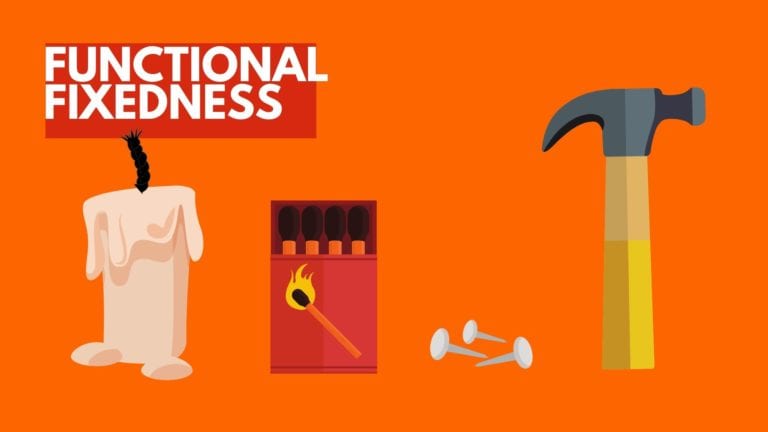
Functional Fixedness
However, because we humans clearly cannot have nice things, the term has been bastardized, oversimplified, and not problematized enough. When Henrick laughs at my suggestion of doing curls, he is just repeating a learned behavior. It is common in the functional world to look at other forms of training and think they are poor, vain, or irrelevant. On the one side, this is how every culture is created, by creating an other to separate from. That’s how we define our existence as a thing. On the other hand, this attitude is the representation of a very bad case of functional fixedness (FF). Think of this as a bad habit of the mind, a way of thinking that hinders more than helps, and that in the case of Henrick will limit his performance and his movement capacity. The purpose of this post is to explain to you what FF is so that you can catch yourself in this trap, and do something about it.
What we are up against - Part 1
Let’s start today with a grounding idea: we are fortunate enough to live in an age in which we can actually think about how to optimize our personal nutrition. When I was growing up, everyday I saw people in the streets who did not have enough food--I don’t mean they didn’t have high quality food, they didn’t have any kind of food. Luckily things have changed in most parts of the world. And to be sure, if you are reading this you are just trying to improve your health by tweaking your nutrition. This is a privilege of our times: the great access we have to food, to nutritional information, and to sophisticated metrics.
Slay your inner troll!
Trolls suck, and even though they are an Internet creation they are pretty much everywhere IRL too. Yes, they might be called douche bags, and they are not constrained by gender, race, or religion. The only thing that unifies them is that they are just a waste of time and energy. But my experience is that when it comes to fitness and nutrition, we all have an inner troll. And to be honest, this is the worst kind of troll there is.
Plateaus are part of the process, Embrace the stuck!
Plateaus are often understood as problems. As stagnation, as if there is something wrong. Plateaus are a fundamental part of the process. Understand this, and you will be able to surpass them.
The 3:00 PM Chocolate: the Basics of Mindset
Let’s be mathematical today and start by defining what we are talking about: mindset. A mindset is a set of ideas or assumptions that mediate our behaviors. This mediation is bi-directional: mindset can determine our behaviors, just as much as our behaviors can determine our mindset. Long-held mindsets become our core beliefs and define how we see ourselves in the world. So if you think you are bad at math, that conditions your behaviors around numbers and mathematical problems. Which means you don’t even try to do the tip on your bill at a restaurant. On the other hand if you consistently and intentionally practice German each day with the help of a good program and a good teacher, you will end up learning German. In turn you will end up creating a mindset in which you think of yourself as a smart person who can learn new languages. That's it. The mindset model is simple and useful. The great thing about it is that it allows change to happen. Your mindsets and core beliefs can be modified and re-wired.